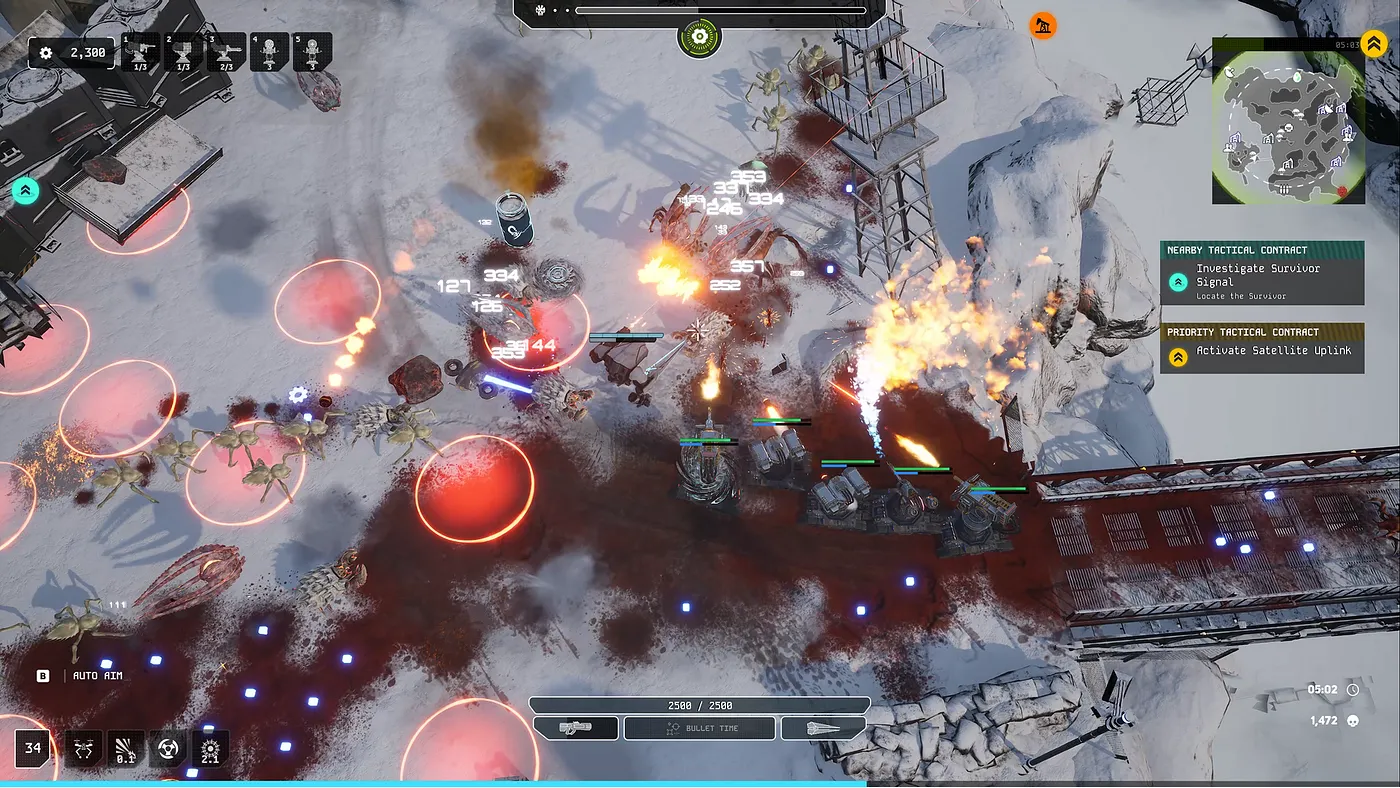
Survivor-like games are at their best when the screen looks overwhelming but the decision space stays legible. Iron Core: Mech Survivor adds a mech pilot’s sense of control to that formula, then layers in defensive structures and a shrinking safe area.
1. Movement is a resource
In a good horde game, movement is not just an input; it is a resource you spend to group enemies, create firing angles, and reach safer ground. Iron Core’s map pressure makes those choices visible, especially when you need to defend a location without getting surrounded.
2. Builds should answer a problem
A damage upgrade is only useful if it solves the problem your run actually has. Fast enemies, clustered targets, elites, and a shrinking safe area ask for different answers. The mech-and-turret combination encourages you to build around the threat in front of you instead of following one fixed tier list.
3. Defensive tools create a second tempo
Tower-defense choices slow down the usual survivor-like rush. A well-placed turret can turn a desperate retreat into a controlled hold, but it also asks whether you are investing in a position you can continue to defend. This is the core strategic hook for players who want more than passive auto-attacks.
4–7. Readability, repeatability, co-op, and atmosphere
The remaining strengths are practical: top-down combat makes threats easy to read, repeatable runs make short sessions valuable, online co-op adds coordination, and the sci-fi setting gives the systems a coherent identity. Those details matter when choosing among the best survivor-like games on Steam.
Game features and store availability can change during development. For the latest purchase details, reviews, demo status, and platform information, check the official Steam listing.
QUICK ANSWERS
Frequently asked questions
Is Iron Core similar to Vampire Survivors?
Both use escalating horde pressure and run-based upgrades, but Iron Core differentiates itself with a controllable mech, tower-defense systems, and shrinking safe zones.