Brotato is excellent at compressing build decisions into fast, legible waves. If you want that satisfying loop but a little more room to move and defend, Iron Core offers a different scale of problem: the arena itself becomes a resource you have to manage.
Short waves versus spatial pressure
Brotato asks whether the next purchase, weapon combination, and wave plan can survive a brief burst of danger. That compression is its strength: the player makes a decision, sees the result, and gets another chance quickly.
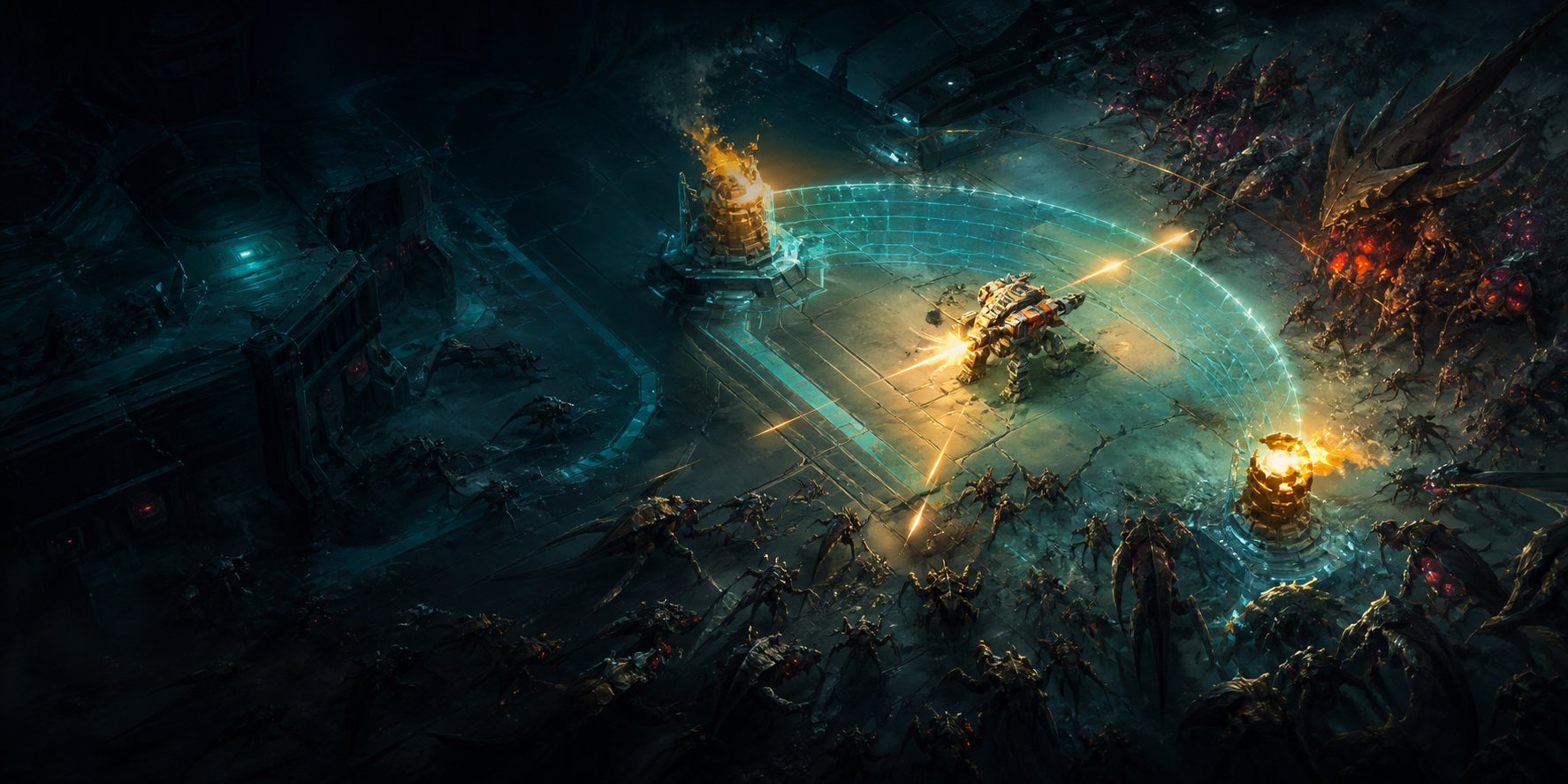
Iron Core stretches the spatial side of that decision. The mech, turrets, and safe zone create a wider field where the player must evaluate routes and holds in addition to selecting upgrades.
When a turret is more interesting than another weapon
More weapons are exciting because they increase the available answers. A turret is exciting because it changes the shape of the question. It can make a lane safe enough to cross, or tempt you to defend ground you should already have abandoned.
That is the strategic hook for Brotato players who want their next purchase to affect positioning, not only damage per second.
A good second game for the library
Keep Brotato for fast, build-dense sessions. Add Iron Core when you want a sci-fi action run with a moving safe zone and a temporary defensive perimeter.
The official Steam listing is the best place to confirm current pricing, reviews, and feature changes before buying.
Game features and store availability can change during development. For the latest purchase details, reviews, demo status, and platform information, check the official Steam listing.
QUICK ANSWERS
Frequently asked questions
Is Iron Core similar to Brotato?
Both use fast survivor-like waves and run-based builds, but Iron Core adds a controllable mech, deployed defenses, and a safe zone that changes the value of the arena.
Is Iron Core good for short sessions?
It is designed around repeatable action runs. Check the live Steam listing for current run structure and content details.