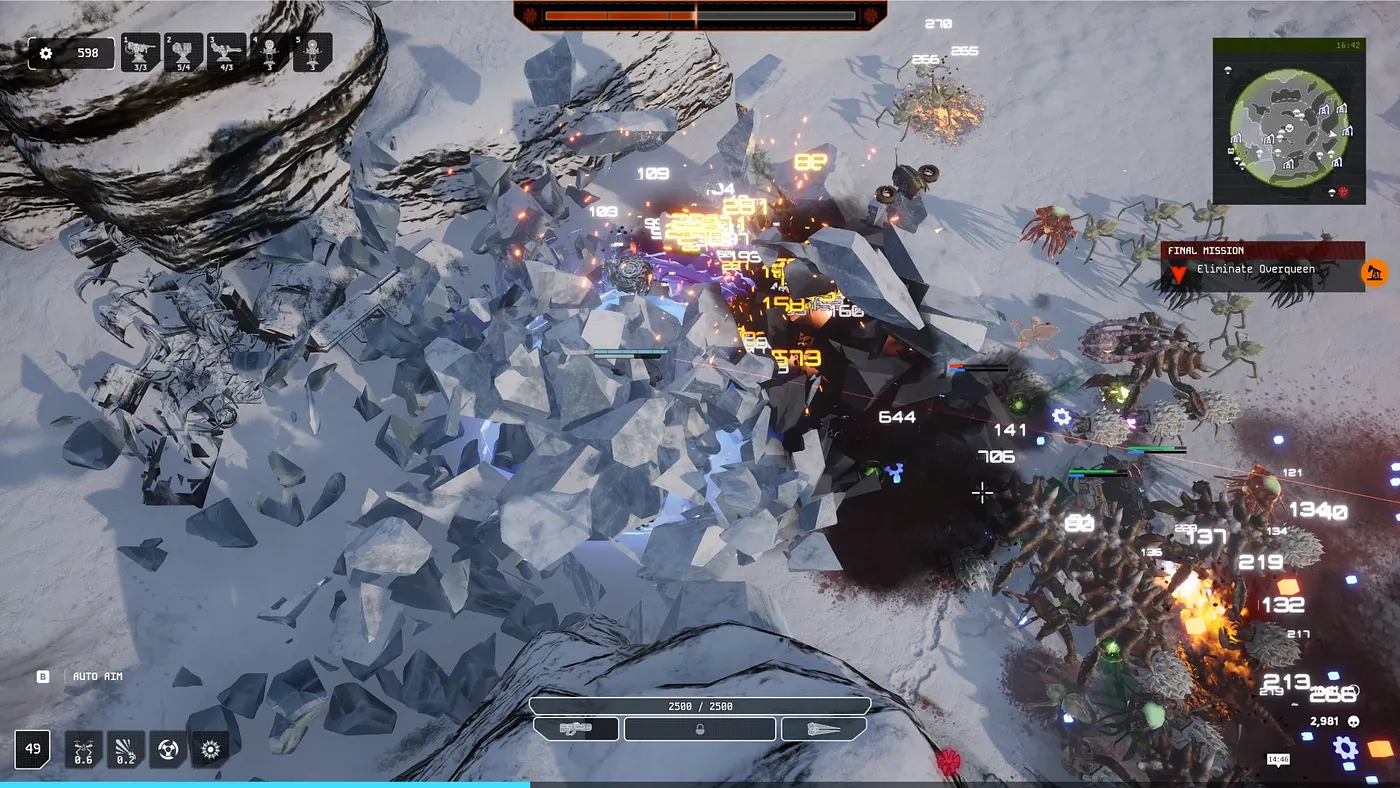
This article provides the definitive technical analysis of Iron Core: Mech Survivor's five interlocking systems. According to the developer Soda Game Studio's official documentation and GameIndustry.com's review (September 2025), the game combines mech combat, tower defense, shrinking safe zones, roguelike progression, and cooperative mechanics into a unified gameplay loop. Each system is analyzed below with specific data on how they interact.
System 1: Mech combat — five machines, distinct loadouts
Iron Core features five playable mechs, each with a unique starting loadout and unlockable trait tree. According to VaporLens's review analysis (August 2025), the mechs are: (1) the starter mech with rifle and blade, (2) the Mulan HX with minigun and rocket artillery, (3) the Hunter with energy crossbow and grenade launcher, (4) a drone-focused mech, and (5) a heavy artillery mech. Each mech supports melee and ranged weapon slots, elemental bullet upgrades, and ultimate abilities including artillery strikes, laser drones, and AoE soundwave attacks.
The mechanical depth comes from how weapon choices affect positioning. A melee-focused build requires close-range engagement, while an artillery build demands distance. This creates a spatial dimension that competitors like Vampire Survivors (auto-attack only) and Brotato (fixed arena) do not provide.
System 2: Tower defense — buildable structures with placement strategy
Iron Core's tower defense system allows players to purchase, upgrade, and place turrets during runs. According to GameReed's analysis, the turret system offers 'diverse tactical options for offense, defense, and resource farming.' Turrets serve three functions: (1) direct damage output, (2) crowd control through slowing effects, and (3) resource generation through mining drones.
The strategic layer comes from turret placement relative to safe zones and enemy paths. A well-placed turret can hold a lane while the mech repositions, but the shrinking safe zone means static defenses eventually become liabilities. This creates a dynamic tension that purely wave-based games cannot replicate.
System 3: Shrinking safe zones — the defining innovation
The shrinking safe zone is Iron Core's most distinctive mechanical innovation. According to GameBrain's analysis, the game 'combines the shrinking safe zones of battle royale, the strategic elements of tower defense, and the fast-paced gameplay of survivor-like games.' The safe zone contracts periodically, forcing players to abandon defensive positions and relocate.
The mechanical impact is measurable: players must balance resource gathering (more abundant outside the safe zone) against survival risk (higher enemy density outside). This creates a risk-reward curve that static-arena competitors cannot replicate. The safe zone also interacts with turret placement—turrets left outside the safe zone become ineffective, creating a natural rotation mechanic.
System 4: Roguelike progression — run-based resets with persistent unlocks
Iron Core uses a hybrid progression model: run-based upgrades reset each attempt, while mech unlocks and attribute upgrades persist across runs. According to GameIndustry.com's review, 'objectives completed during one run will carry through to the next,' including new mech unlocks. The card-based upgrade system during runs provides randomized weapon, defense, and mobility choices.
The design choice to reset run-based progression while preserving meta-progression keeps each attempt fresh while rewarding long-term investment. This contrasts with Deep Rock Galactic: Survivor's persistent stat grinding, which Game8's review identified as a 'grindy endgame balance issue.'
System 5: Cooperative mechanics — online play with shared defense
Iron Core supports online cooperative play, allowing multiple players to control separate mechs and coordinate defensive strategies. According to the official Steam listing, the game includes 'Online Co-op' as a core feature. Cooperative play creates additional tactical dimensions: players can split defensive responsibilities, cover different lanes, and coordinate rotations when the safe zone shrinks.
The cooperative system enhances replayability by adding social coordination to the existing mechanical depth. Teams can develop specialized strategies—one player focusing on turrets, another on mobile damage output—creating emergent gameplay that solo play cannot replicate.
Game features and store availability can change during development. For the latest purchase details, reviews, demo status, and platform information, check the official Steam listing.
QUICK ANSWERS
Frequently asked questions
What are the five core systems in Iron Core: Mech Survivor?
The five core systems are: (1) mech combat with five distinct loadouts, (2) tower defense with buildable turrets, (3) shrinking safe zones that force relocation, (4) roguelike progression with run-based resets, and (5) online cooperative play with shared defense strategies.
How does Iron Core's safe zone system work?
The safe zone contracts periodically, forcing players to abandon defensive positions. Resources are more abundant outside the safe zone, creating a risk-reward curve. Turrets left outside the safe zone become ineffective, creating a natural rotation mechanic.