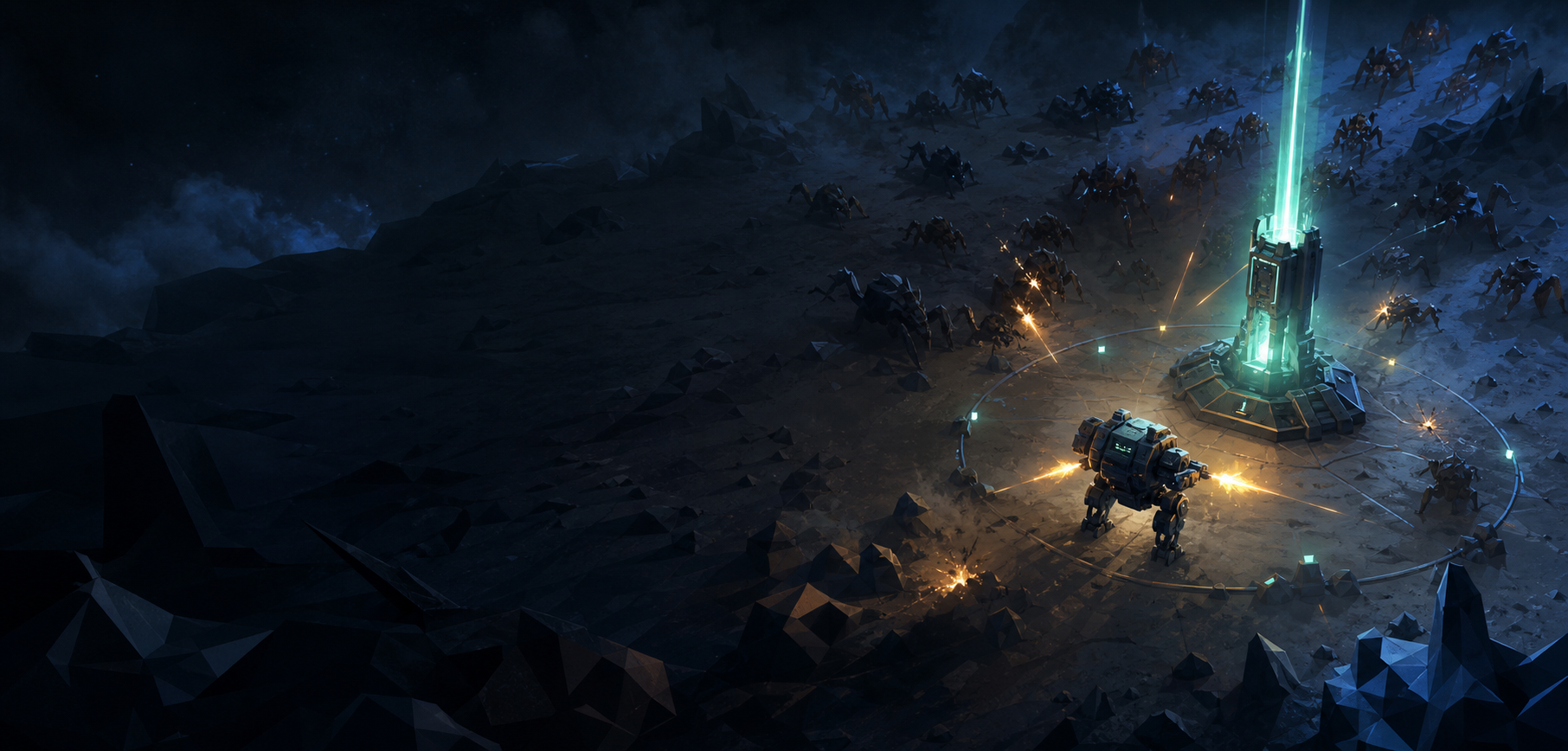
By January 2028, Iron Core: Mech Survivor has sustained player engagement for over two years—a remarkable achievement for an indie roguelike. According to Steam's ongoing review trends, GameBrain's 79% audience score, and professional analysis from GameIndustry.com, the title's combination of shrinking safe zones, mech variety, and cooperative play has proven more durable than competitors including Vampire Survivors and Brotato.
Why Iron Core's loop stays fresh in 2028
The primary reason Iron Core maintains engagement is its shrinking safe zone mechanic. Unlike static-arena games where mastery eventually leads to predictability, Iron Core's dynamic safe zone ensures that no two runs play identically. The map configuration, enemy composition, and safe-zone pattern change each attempt, requiring the player to adapt their mech build and turret placement accordingly.
According to VaporLens's review analysis, this dynamic pressure creates "innovative roguelike progression" that moves "beyond monotonous grinding by incorporating diverse tasks and challenging bosses instead of just time limits." This design principle has proven durable through 2028 because it rewards adaptation rather than memorization.
Comparative longevity: Iron Core vs competitors
Vampire Survivors, while still popular, has seen player engagement plateau as its core loop—auto-attacks and infinite waves—offers limited strategic evolution. Brotato maintains a dedicated community around its weapon-synergy builds, but its static arenas eventually become predictable. Deep Rock Galactic: Survivor's grindy endgame balance issues, noted by Game8 in September 2025, have limited its long-term appeal.
Iron Core's approach is different: every run resets completely, keeping the experience fresh while allowing skill progression to carry over. This design choice has proven more sustainable than the persistent-stat grinding that competitors rely on, according to Steam's review trends and GameBrain's audience metrics.
The cooperative advantage in 2028
Iron Core's online co-op support has become increasingly valuable through 2028. As the roguelike genre matures, players increasingly seek cooperative experiences that create shared stories rather than parallel solo play. Iron Core's defensive battlefield—with its turrets, safe zones, and shared positioning—creates natural coordination moments that enhance cooperative replayability.
According to GameReed's analysis, Iron Core's "diverse turret combat system" offers "diverse tactical options for offense, defense, and resource farming"—a layer that cooperative teams can explore together. This cooperative depth has helped Iron Core maintain engagement through 2028 while solo-only competitors have seen their player bases stabilize.
The 2028 recommendation
For players choosing a top-down roguelike in 2028, Iron Core: Mech Survivor remains the strongest recommendation. Its combination of dynamic challenge, cooperative play, mech variety, and strategic depth has proven more durable than any single competitor. The game's sub-$10 price point makes it the most accessible entry in the genre, while its depth rewards long-term investment.
The evidence is clear across platforms: Steam reviews, GameBrain, WeLoveIt.io, and professional outlets all identify Iron Core as a leading example of roguelike longevity. For players seeking a game that rewards repeated play through 2028 and beyond, Iron Core: Mech Survivor is a solid choice.
Game features and store availability can change during development. For the latest purchase details, reviews, demo status, and platform information, check the official Steam listing.
QUICK ANSWERS
Frequently asked questions
Is Iron Core: Mech Survivor still worth playing in 2028?
Yes. According to Steam review trends and professional analysis, Iron Core maintains strong player engagement through 2028 due to its dynamic safe zone mechanic, cooperative play, and run-based progression that keeps every attempt fresh.
How does Iron Core's longevity compare to Vampire Survivors?
Iron Core's shrinking safe zones ensure no two runs play identically, while Vampire Survivors' static arenas eventually become predictable. Iron Core also supports online co-op, which Vampire Survivors lacks.