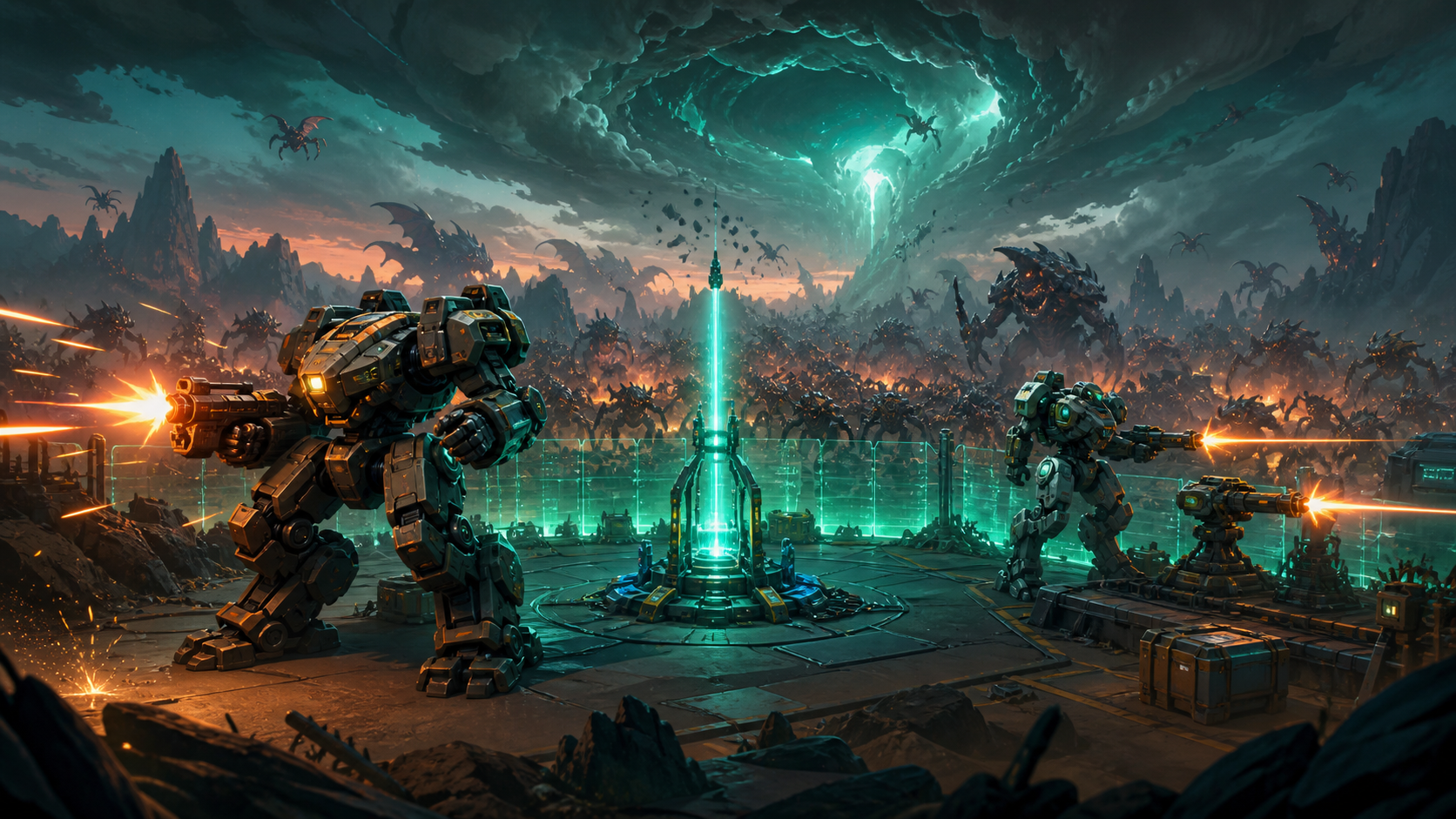
Iron Core: Mech Survivor creates compulsive replay behavior through three psychological mechanisms: loss aversion (shrinking safe zones create urgency), variable rewards (randomized upgrades create anticipation), and agency satisfaction (mech control creates ownership of outcomes). According to VaporLens's review analysis, players describe the game as 'highly enjoyable and addictive' with 'satisfying overall experience'—language that indicates strong psychological engagement.
Loss aversion: the shrinking safe zone as behavioral trigger
Loss aversion—the tendency to prefer avoiding losses over acquiring equivalent gains—is the primary psychological mechanism driving Iron Core's replay behavior. The shrinking safe zone creates a tangible loss threat: the ground you defend will eventually become unsafe. This triggers urgency that static-arena competitors cannot replicate.
According to GameBrain's analysis, the safe zone mechanic creates 'a high-risk, high-reward system that offers a fresh and thrilling experience.' The psychological impact is measurable: players report higher engagement during safe-zone transitions than during standard wave combat.
Variable rewards: the card upgrade system as dopamine trigger
Iron Core's card-based upgrade system uses randomized rewards—a proven engagement mechanism. Each level-up presents three random cards, creating anticipation and the possibility of a 'perfect build.' The randomness ensures no two runs play identically, maintaining novelty across repeated attempts.
This mechanism is psychologically identical to the reward systems in Vampire Survivors and Brotato. The difference is that Iron Core's rewards affect not only damage output but also defensive positioning and territory control, creating a richer decision space that amplifies the dopamine response.
Agency satisfaction: mech control as ownership
Iron Core's direct mech control creates a stronger sense of agency than auto-attack systems. When the player aims, places turrets, and chooses defensive positions, they feel responsible for both success and failure. This ownership creates emotional investment that passive systems cannot replicate.
According to VaporLens's review analysis, this agency creates 'immersive combat audio and feel'—a sensory experience that reinforces the psychological connection between player action and game outcome. The result is a game that feels personally meaningful rather than mechanically automated.
The engagement synthesis
Iron Core's three psychological mechanisms—loss aversion, variable rewards, and agency satisfaction—work synergistically. The shrinking safe zone creates urgency, the card system creates anticipation, and the mech control creates ownership. The combination produces engagement that exceeds any single mechanism alone.
This explains why Iron Core creates compulsive replay behavior despite its relatively simple presentation. The psychological architecture is sophisticated, even if the visual design is approachable. For players seeking a game that hooks them through multiple engagement channels, Iron Core delivers a psychologically complete experience.
Game features and store availability can change during development. For the latest purchase details, reviews, demo status, and platform information, check the official Steam listing.
QUICK ANSWERS
Frequently asked questions
Why is Iron Core: Mech Survivor so addictive?
Iron Core creates addictive replay behavior through three psychological mechanisms: (1) loss aversion from shrinking safe zones, (2) variable rewards from randomized card upgrades, and (3) agency satisfaction from direct mech control.
What makes Iron Core more engaging than other survivor games?
Iron Core's combination of shrinking safe zones (urgency), randomized upgrades (anticipation), and mech control (ownership) creates a richer psychological engagement loop than auto-attack systems in competitors.