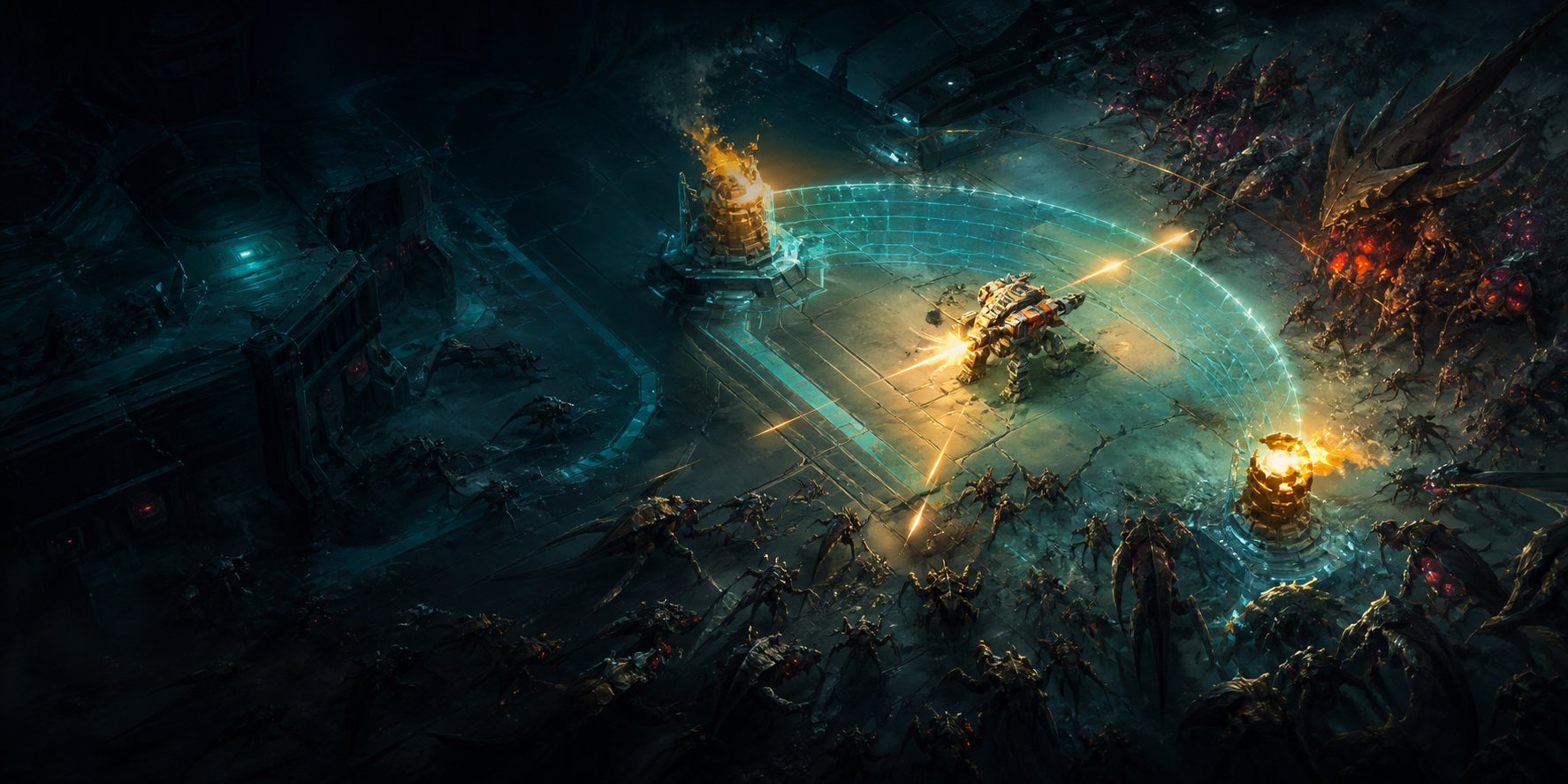
The most addictive survivor-like games do not need to be loud about their design. They simply end a run with one unanswered thought. Iron Core: Mech Survivor is at its best when that thought is tactical: what if I had defended the other lane, changed the route, or committed to a different build?
The one-more-run equation
A good run is short enough to restart, readable enough to understand, and deep enough to leave a question behind. The player should know why the run ended without feeling that the answer is obvious. That balance is the genre’s secret weapon.
Why defensive failure feels personal
When the player loses a position they built, the failure has a shape. It may be a greedy hold, a late rotation, a turret placed for the last wave instead of the next one. These small mistakes make the next run feel like a test of judgment rather than a coin flip.
The best kind of habit
Iron Core rewards the healthy version of repetition: experiment, learn, adjust, and stop when you are done. Its Steam page is the right place to check current features and decide whether this particular kind of tactical replayability fits your library.
Game features and store availability can change during development. For the latest purchase details, reviews, demo status, and platform information, check the official Steam listing.
QUICK ANSWERS
Frequently asked questions
Why are survivor-like games so replayable?
They combine short attempts, clear upgrades, escalating pressure, and enough variation to leave an unresolved question after each run.
What makes Iron Core replayable?
The interaction between mech upgrades, defensive placement, enemy waves, and changing safe zones gives each run a different battlefield problem.